

Softball Screens
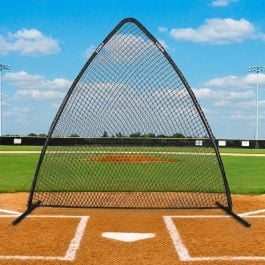
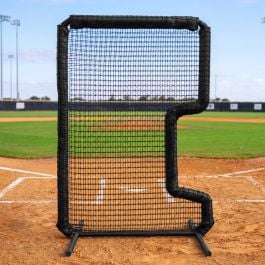
Net World Sports stock a range of softball pitching screens and protective screens to help maximise safety and performance during practice. A softball pitching screen protects the pitcher during batting practice. The softball screen lets the pitcher throw to a batter from behind or beside the screen - the screen minimises the risk of a hard-hit ball coming back at them. The various softball screens on offer are available with different specifications to suit different budgets and requirements. Choose from regulation-size pitching screens for club and school use through to portable softball pitching screens that pack down for easy transport and storage. Our softball screens use heavy-duty steel frames and thick netting built to hold up to fastpitch and slow-pitch use. Softball screens can also be used for safety and to build confidence too. A pitcher new to the sport, or returning after a significant impact with a softball or baseball, can use the screens to help them build confidence, until they are ready to pitch without the barrier/protection. The 4-way FORZA training nets add options for hitters working on contact and directional practice. Don't compromise on player safety; shop the softball pitching screen and protective screen range, suitable for players of all ages and abilities.



![FORZA 3-Way Baseball & Softball Training Net [7ft x 7ft]](https://nwscdn.com/media/catalog/product/cache/h265xw265/f/o/forza_tri_baseball_hitting_net_main.jpg)
![FORTRESS Pro Softball Pitching Screen [Nimitz Edition]](https://nwscdn.com/media/catalog/product/cache/h265xw265/s/o/softball_pitching_screen_nimitz_main_1.jpg)
SOFTBALL PITCHING SCREEN FAQs
What is a softball pitching screen used for?
Softball screens are used in training to protect the pitcher. The pitcher pitches/throws to the batter from behind the screen, or next to it. The screen protects the pitcher from a return ball hit at force from the batter. There is usually a hole or cutout area which provides enough room for the pitcher to throw the ball through and to the batter, whilst mitigating the risk of injury from a hard hit return.
Are baseball pitching screens the same as softball pitching screens?
Baseball and softball pitching screens look similar and some can be used interchangeably. However, softball pitching distances are shorter - 43ft in softball and 60ft 6in in baseball - so whether the net is the same or not, the screen should be set at a sport-specific distance. Softball uses a larger 12in ball compared to a 9in baseball ball, meaning that some softball screens may have nets with a larger aperture, which could allow baseballs to travel through them. Some screens are dual-labelled for both sports; others are optimised for one. Check the product specifications before buying if you plan to use the screen for one specific sport.
What size softball pitching screen do I need?
Standard softball pitching screens normally measure 7ft x 7ft. This provides enough coverage to protect the pitcher's body from a hard hit return ball. Smaller portable screens are available in sizes including 5ft x 5ft and 6ft x 6ft. These are easier to relocate but can leave the pitcher slightly exposed - especially any pitcher who is taller than the screen's height. Regulation is the safest choice, so opt for a 7ft x 7ft screen if possible.
How far should a softball pitching screen sit from the batter?
The screen should be at the regulation distance. Unless you are training a complete beginner and they can't reach the batter accurately, you may wish to move the screen closer to the batter. Just be aware that the closer you are to the batter, the return will tend to come back with more force and power. The adult standard pitching distances are 43ft in softball and 60ft 6in in baseball. Youth pitching distances vary by age group, but typically start at 35ft for U10 players. The screen should always provide a barrier between the pitcher's body and head, and the batter.
Are Net World Sports' softball pitching screens suitable for both fastpitch and slow-pitch?
Yes, thanks to the durable materials including heavy-duty steel frames, the pitching nets and screens are suitable for the harder hit balls of fastpitch. The knotted netting is heavy-duty and absorbs ball impacts easily. Be sure to check the net for damage before each session.
Do I need a screen for softball batting practice, or can I use a net?
Softball screens and softball nets serve different purposes. You can use one, or use both in training. A pitching screen protects the pitcher from getting hit with the ball during batting practice. A batting net or hitting net catches the ball after the batter hits it, so the hitter can practise contact without needing a full fielded outfield. A batting net also makes retrieving the balls much easier and quicker. Many batting practice setups use both: a pitching screen at the pitcher's position, and a hitting net or backstop behind the batter.